
The regenerative and sustainable blue economy offers considerable investment potential. The report From Red Lines to Blue Lines, published in June 2026 and co-authored by Marianne Carpentier for the NGO Ocean Risk and Resilience Action Alliance (ORRAA) in collaboration with WEF ACT Ocean and the United Nations Environment Programme Finance Initiative (UNEP FI), highlights a median investment opportunity of around $550 billion per year by 2030, spread across six sectors of the regenerative and sustainable blue economy. It is therefore possible to achieve financial returns while strengthening the resilience of the ocean and coastal areas.
However, investing in activities that benefit the ocean is only part of the journey towards a regenerative and sustainable blue economy. The other, equally necessary, and even more urgent, aspect is to put an end to activities that destroy ecosystems, and which are the most polluting and the biggest emitters of greenhouse gases. There are two scenarios: either these activities already exist and are being funded, in which case investors must exclude them from their investment policies and divest from them (intensive fishing or offshore oil drilling, for example); or they are new activities, which must be abandoned before they take off (deep-sea mining, economic activities in the Arctic).
While the conversation surrounding sustainable investment opportunities is positive and action-oriented, the second aspect, that of ‘”not-to-do”, is more challenging from a financier’s perspective, because it amounts to forgoing the financing of activities that are profitable today or potentially profitable in the future. Yet the stakes are high: according to the United Nations Environment Programme (UNEP) report, State of Finance for Nature 2026 (January 2026), ‘For every dollar invested in protecting nature, 30 are spent on destroying it. In 2023, $7,300 billion funded activities harmful to nature, ranging from fossil fuel subsidies to investments in high-impact sectors such as energy. Nature-based solutions received only $220 billion, of which $23 billion was private funding”. Stopping the funding of these activities is at least as important a lever as funding new sustainable activities.
How can we bring about change on this issue? An investor’s decision is based on two concepts: opportunity and risk, sometimes guided by the compass of impact.
In a previous article, we explored the concept of ‘doing’, which is largely driven by the search for opportunities. The concept of ‘not doing’ is driven by a different factor: risk. It could be physical (affecting financed assets), or transitional (regulatory, legal or reputational). However, this risk, as documented by science, must be recognised by decision-makers.
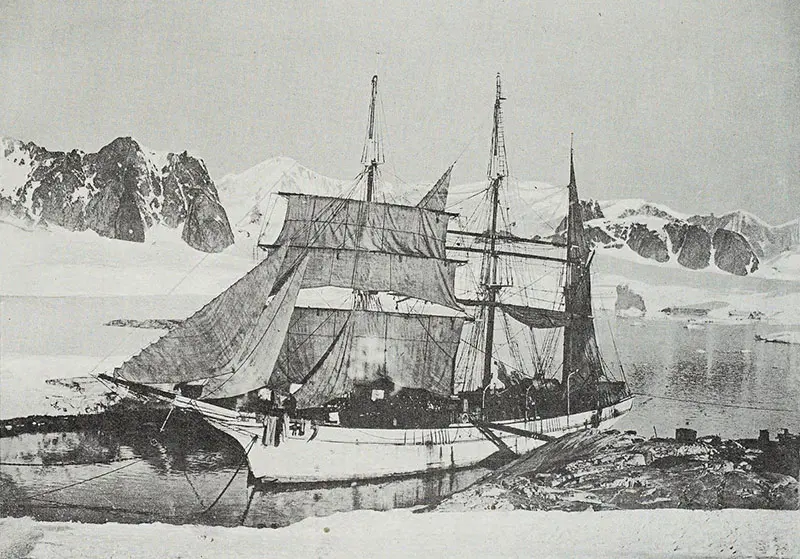
At the start of the 20th century, Commander Charcot set out to explore Antarctica aboard the Pourquoi-Pas? (Why not?), driven by the promise of discoveries and new wealth. Would it not be more daring today to ask: why not to?
The risks associated with deep-sea mining, which targets nickel, cobalt and manganese from the ocean floor, have long been known. In 1989, German researchers ploughed 11 km² of the seabed, at a depth of over 4,000 metres off the coast of Peru, to simulate mining operations. Twenty-six years later, the scars were still visible and the marine life had not recovered (Scientific Reports, 2019). More than 1,000 experts from over 75 countries are now calling for a moratorium, concerned about a loss of biodiversity that is ‘irreversible over several generations’ (Marine Expert Statement).
Yet this real risk, on its own, has not been enough to put a stop to these projects. What is a game-changer is its translation into perceived risk, at a time when regulators, insurers and banks are all coming to the same conclusion. The report Red Lines in the Abyss, published in March 2026 by the NGOs Seas At Risk and Deep Sea Mining Campaign, identifies the warning signs.
Firstly, there is regulatory uncertainty. The International Seabed Authority, which oversees these activities in international waters, has awarded 31 exploration contracts, 17 of which are in the Clarion-Clipperton Zone, a vast abyssal plain in the Pacific Ocean situated between Hawaii and Mexico (Congressional Research Service, June 2026). Its mining code, which is intended to govern commercial exploitation, has still not been finalised: issues relating to environmental management, revenue sharing and liability for damage remain unresolved. In 2025, the United States launched a domestic procedure that circumvents this framework. The Metals Company, the most advanced firm in the sector, has submitted an application there which is still under review (a public hearing was held on 13 October). No operating licence has been issued to date (The Metals Company). Far from clarifying the regulatory framework, this unilateral approach adds further legal uncertainty. Norway, although generally supportive, has suspended its first licences until at least 2029, and 46 countries now support a moratorium or a precautionary pause (Mongabay, August 2026).
Next, there is economic fragility. Nautilus Minerals, which was running a project in the waters off Papua New Guinea, went bankrupt in 2019. Loke Marine Minerals, which held international exploration contracts, followed suit in 2025. Neither had extracted a single tonne. The analyses cited in the report show how thin the margin is: a slight drop in metal prices or a modest cost overrun would be enough to erase the profits these ventures count on..
Finally, the withdrawal of insurers: Hannover Re has not underwritten these projects since 2023; Swiss Re excludes them; Zurich says it has ‘no appetite’ to cover them. However, without insurance, no offshore industrial project can secure funding: the insurers’ refusal acts as a barrier for the rest of the chain.
As a result, 82 financial institutions, with assets totalling around 24,000 billion euros, either exclude, restrict or publicly disapprove of this activity. Thirty-seven of them rule out any financing, insurance or investment, including BNP Paribas, Crédit Agricole, Caisse des Dépôts, Deutsche Bank, UBS and Lloyds, and nearly half of these policies are less than a year old. The reasons given speak the language of risk: scientific uncertainty for the Caisse des Dépôts, economic uncertainty for BNP Paribas, and regulatory risk for others.
Scientific risk thus ended up being perceived as a risk even before the activity had begun. However, matters become more complicated when it comes to phasing out an activity that is already profitable.
What about polluting, emission-generating and ecosystem-destructive activities that already exist and are funded?
Excluding an existing activity effectively means accepting an immediate loss of revenue. The biologist Olivier Hamant offers a useful framework for considering this choice in his 2023 essay, Antidote to the Cult of Performance. Performance consists of achieving an objective with the fewest possible resources, whereas robustness is the ability to keep functioning amid constant fluctuations.. The two are opposed: by constantly optimising for the short term, we make ourselves more vulnerable. For a funder, refusing to finance the overexploitation of a resource amounts to choosing robustness. Within the context of the blue economy, the example of the Newfoundland cod fishery illustrates the performance-driven strategy adopted by stakeholders, followed by the costs incurred.
For nearly five centuries, this fish has shaped the island’s economy and culture. After the Second World War, sonar and factory trawlers capable of staying at sea for months caused catches to skyrocket. Then, when Canada extended its fishing zone to 200 nautical miles in 1977, the industry boomed: the number of fishermen in the province rose from 15,000 to 35,000 between 1975 and 1980, and by the mid-1980s, the cod industry was worth some 700 million Canadian dollars. There was no shortage of warning signs. As early as 1986, a report commissioned by an association of inshore fishermen concluded that government scientists had overestimated the stock by more than 100 per cent. In 1989, an internal review confirmed this assessment and scientists recommended halving the quotas; the government did not follow their advice, preferring to preserve the industry in the short term. Three years later, the spawning biomass had fallen to 1 per cent of its peak level. The moratorium of 2 July 1992 led to the largest mass redundancy in Canadian history, affecting 40,000 jobs, and the province lost 10 per cent of its population over a decade (The Canadian Encyclopaedia).
A partial suspension in 1989 would have cost part of the industry; the suspension imposed in 1992 wiped it out entirely, for more than thirty years. And the temptation remains: commercial fishing reopened in 2024, and quotas more than doubled in 2025, despite reservations from some scientists about the health of the stock.
In a world where crises, geopolitical, climatic and economic, are piling up, fluctuations are becoming the norm. Scientists themselves are struggling to predict how global warming will redistribute marine resources. In this context, the players best optimised for performance are also the most vulnerable.
The 2026 energy crisis reiterates the same lesson on a different scale. In an interview with Le Grand Continent, Fatih Birol, Executive Director of the International Energy Agency, explains the consequences of the war in the Gulf (“the greatest threat to energy security in history”), which has transformed the dynamics of the global energy market. The bulk of the region’s oil and gas exports passed through the Strait of Hormuz. A reliance on a single route, the most efficient under normal circumstances, has become the most vulnerable in the event of a crisis. Since then, market players have prioritised reliable suppliers over the cheapest ones, diversified their supply routes and accelerated the roll-out of renewables and nuclear power, with “nearly 90 gigawatts of nuclear capacity under construction, a level not seen for nearly forty years”. For the first time, he notes, energy security and the fight against climate change are converging. Electrification is therefore set to be one of the central themes of COP31, the United Nations Climate Change Conference co-chaired by Turkey and Australia, to be held in Antalya from 9 to 20 November 2026.
The two stories mirror each other. In the deep seas, the decision to step back worked because regulators, insurers and banks all pulled together. In Newfoundland, no one wanted to be the first to reduce their share, and it was the resource itself that ultimately decided the matter. For the ‘not-to-do’ approach often comes up against the same obstacle: whoever steps back alone pays the price, whilst a less scrupulous competitor takes the place left vacant. Withdrawal must therefore become a collective effort to turn the tide.
A player who single-handedly withdraws from financing can be replaced by a competitor. The question, therefore, is how banks and insurers can withdraw together.
In the case of deep-sea mining, as we have seen previously, the group effect is already at play. Among the institutions that exclude this activity are reinsurers such as Hannover Re and Swiss Re, which insure the insurers themselves: their refusal reduces the entire market’s capacity to cover these projects. This refusal extends to the banks, which are now required by their regulators to verify, before granting a loan, which assets are insured, against which risks, and what losses they would incur without insurance
Regulatory authorities are also seeking to harmonise their practices. The Network of Central Banks and Supervisors for the Greening of the Financial System (NGFS), established in 2017 by eight institutions and now comprising more than 160 members and observers, published an updated guide for them in September 2026. Nearly three-quarters of the supervisors surveyed state that they carry out climate stress tests, and nature-related risks are taking on a new significance. In the European Union, banks have also been required since January 2026 to draw up transition plans, in which supervisors examine their credit policies and the limits they set for themselves. An exclusion enshrined in this framework carries far greater weight than a voluntary commitment. However, these coalitions remain fragile, as demonstrated by the US Federal Reserve’s withdrawal from the NGFS in January 2025, hence the decisive role of regulation.
However, the rule, as it stands, encourages ‘doing’ rather than ‘not doing’. The Hungarian central bank is relaxing the capital requirements for certain green loans. Conversely, the additional capital requirements proposed by the NGFS for banks whose lending is concentrated in high-emission sectors or in areas prone to flooding remain at the exploratory stage. The Basel Committee, which sets international banking standards, has therefore not amended the minimum requirements to take climate risk into account. Applied initially to new financing, such measures would nevertheless encourage the phasing out of certain activities without depriving businesses of the means to undertake their own transition. Governments themselves are struggling to apply the principle: meeting in Yerevan until 30 October for COP17 on biodiversity, they remain far from meeting their commitment to reduce subsidies harmful to nature by $500 billion a year by 2030.
Yet the regulator knows how to enforce robustness when it chooses to. Following the collapse of Credit Suisse, the Swiss government proposed in June 2025 to require UBS to hold up to $26 billion in additional capital, a measure deemed ‘extreme’ by the bank at the time.
In Yerevan, COP17 on biodiversity is drawing to a close amid division, and the point of contention is telling: the ‘inaction’ of states. Every year, some 2,400 billion dollars in public subsidies continue to fund fossil fuels, mining and industrial agriculture, and efforts to reduce them have barely begun (AFP, October 2026). The most striking development lies elsewhere: it is now companies that are calling for reform. 130 of them, including BNP Paribas, Danone and Hermès, are calling for a review of subsidies for intensive farming and industrial fishing. They expect governments to do what no single actor can achieve alone: change the rules, so that giving something up ceases to be a disadvantage.
On 9 November, COP31 will resume discussions on this very issue in Antalya. From one conference to the next, the imbalance persists: there is ready agreement on what needs to be funded, but far less so on what funding should be withdrawn.
In 1853, two years after Moby Dick, Herman Melville published Bartleby, the Scrivener, subtitled ‘A Wall Street Story’. In it, a copyist responds to every request from his employer with a phrase that has since become famous: ‘I would prefer not to’. This simple refusal, gentle yet stubborn, is enough to bring the entire office to a standstill. The most famous refusal in literature thus originated at the very heart of the financial world. But Bartleby’s refusal is solitary, without reason or consequence, and ultimately consumes him. What is expected today of banks, insurers and governments is of a different nature: a refusal justified by risk, shared and enshrined in the rules. Bartleby preferred not to. The financial world, for its part, must learn to decide not to.
Share this article