
Cities are home to a growing share of the population, economic activities, and strategic infrastructure. Although they cover only 2% of the Earth’s land area, they currently generate more than 80% of global GDP and are expected to be home to nearly seven out of every ten people by 2050—placing them on the front lines of the consequences of climate change. Their adaptation is therefore a major challenge of the 21st century.
Urban areas are particularly vulnerable to extreme heat events due to the urban heat island effect. Hardened surfaces (concrete, asphalt) absorb solar energy during the day and release it at night, while the density of buildings limits air circulation. The health consequences are already significant. The 2003 European heat wave is estimated to have caused more than 70,000 deaths in Europe. This risk is largely due to heat stress (the body’s inability to dissipate the heat it produces), which primarily affects urban populations. A Copernicus program study published in 2024 and covering 100 European cities highlights that the centerscity centers of major cities such as Paris or London can experience nighttime temperatures up to 4°C higher than in surrounding rural areas, thereby exacerbating health risks during episodes of extreme heat.
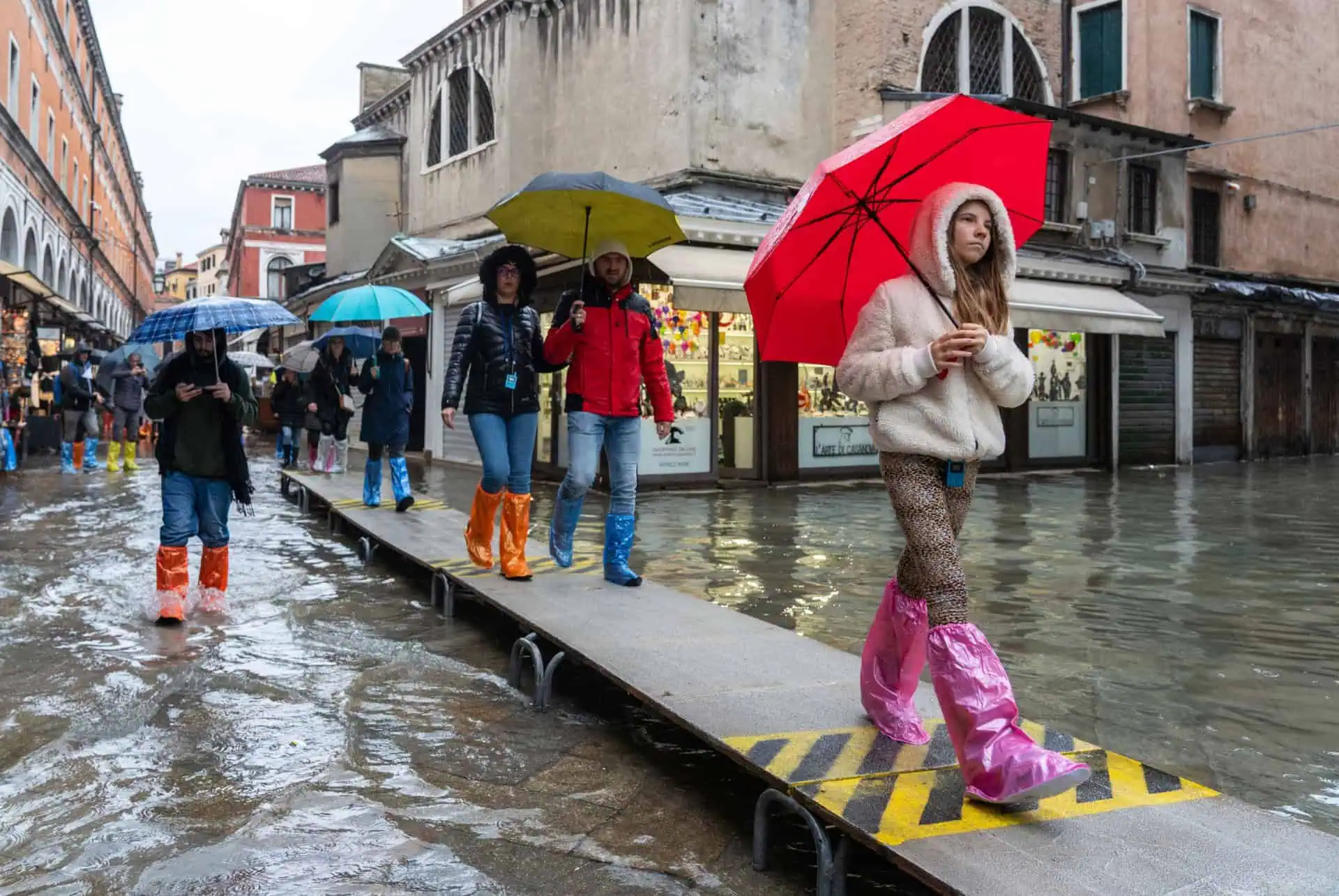
Urban areas are also facing an increase in water-related risks. Paved surfaces have difficulty absorbing heavy rainfall, which increases runoff and flooding. In coastal cities, rising sea levels pose an additional threat. In Venice, flooding caused by high tides can submerge up to 90% of the city when water levels exceed 140 cm, illustrating the growing vulnerability of coastal urban areas to climate change. More broadly, in France, Cerema projections show that, under a “business-as-usual” scenario combining a one-meter rise in sea level and the absence of effective coastal protection, nearly half a million homes and 1,800 km of roads could be affected by coastal erosion and inundation by 2100.
Finally, extreme weather events undermine the very functioning of cities. Heat waves disrupt transportation and energy networks; droughts strain water supplies; and floods damage infrastructure. However, these vulnerabilities do not result solely from climate change. They also stem from architectural choices inherited from the past. Many traditional buildings were adapted to local climatic constraints, such as cave dwellings that harness the thermal inertia of rock to stay cool. Conversely, the materials favored by contemporary urbanization (concrete, asphalt, glass) store heat and struggle to release it, contributing to the intensification of urban heat islands. Adaptation therefore also involves rethinking building materials and construction techniques, sometimes drawing inspiration from traditional know-how.
Cities thus appear to be areas particularly vulnerable to the consequences of climate change. But they also concentrate the financial, technical, and human resources needed to address these challenges. This dual reality explains why cities are now prime testing grounds for climate adaptation. Cities are already experimenting with numerous solutions to reduce their vulnerability.
The first form of adaptation involves protecting populations, activities, and infrastructure from the effects of climate change without fundamentally altering the city’s structure. The primary goal is to maintain the functioning of the existing system despite more challenging climatic conditions. This so-called “technical” adaptation relies on a wide variety of measures (improved building insulation, sunshades, flood barriers).
Air conditioning illustrates this logic. In the face of increasing heat waves, it helps quickly reduce residents’ exposure to extreme temperatures and limit certain health risks. The immediate effectiveness of these policies explains their rapid expansion. However, this solution comes with its own set of challenges. Cooling already accounts for about 10% of global electricity consumption, and this share is expected to more than triple by 2050—not to mention the hot air discharged from buildings, which exacerbates urban heat islands locally. An effective response at the individual level can therefore exacerbate the problem at the collective level.
However, this limitation extends beyond the specific case of air conditioning. More generally, technical adaptation often aims to preserve the status quo rather than address the root causes of urban vulnerability. While these strategies are often essential short-term responses, they do not necessarily eliminate the factors that make cities vulnerable and should therefore be accompanied by more structural changes.
Adaptation through urban planning aims to directly reduce the region’s vulnerability. It is not just a matter of withstanding climate-related hazards, but of transforming the city itself so that it is less exposed to extreme weather events.
This approach relies in particular on nature-based solutions. Greening urban spaces helps reduce temperatures thanks to the shade provided by trees. Meanwhile, restoring permeable surfaces improves water infiltration during periods of heavy rain and limits runoff.
Many cities have embarked on this type of transformation. In Paris, the Cours Oasis program, launched in 2017, is gradually converting paved school playgrounds into green, permeable spaces: more than 200 playgrounds have already been transformed, reducing the perceived temperature by up to 8 degrees Celsius during heat waves. In China, the “sponge cities” developed since 2015 rely on the creation of flood-retention parks, retention basins, and surfaces capable of absorbing a significant portion of stormwater, thereby reducing the risk of flooding; about 30 cities, including Shenzhen and Wuhan, are currently engaged in this initiative.
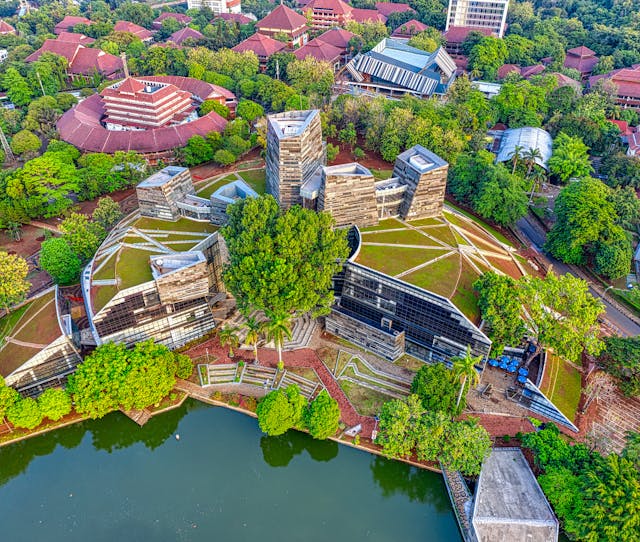
However, this strategy presents significant challenges. Transforming the urban fabric requires time, land, and investment, and the results are not always immediate. Furthermore, these developments can sometimes conflict with certain heritage preservation requirements. In Lyon, the proposal to green Place Bellecour—put forward by residents as part of a participatory budgeting initiative—ran into obstacles due to the square’s status as a listed site, which requires approval from several ministries and not just the Architecte des Bâtiments de France. Furthermore, the soil—which is barren in its current state—would have required the removal of the underground parking garage to allow for actual planting. The project was initially shelved in favor of a temporary shading structure, before being revived on a smaller scale: in January 2026, the City voted to green only the northern promenade following an agreement in principle from government agencies. It thus took four years to move from a citizen-led request to a partial implementation.
Adaptation also involves changes in behavior, habits, and lifestyles. From this perspective, the goal is not only to transform the city but also to change the way its residents live there and engage with it.
This social adaptation takes place first and foremost at the level of the urban organization itself. The concept of the “15-minute city,” theorized in 2016 by urban planner Carlos Moreno, is the most successful illustration of this. The idea is to rethink urban space so that every resident can reach all their essential needs—housing, work, and shops—on foot or by bike within fifteen minutes, thereby reducing dependence on cars.
This adaptation at the city level goes hand in hand with adaptation at the level of individual and professional schedules, which falls more within the purview of civil society and businesses than urban planning: staggered work schedules, the widespread adoption of telework during heat waves, and adjustments to the operating hours of certain public facilities.
Nevertheless, this type of adaptation remains difficult to implement. The transformation of urban space sometimes meets with strong resistance, as demonstrated by the controversy that arose in Oxford in 2023 over the “15-minute city” concept. Measures to limit car traffic between neighborhoods were viewed by some as a restriction on freedom of movement, even fueling conspiracy theories. And Carlos Moreno himself had to deny that there was any coercive intent behind the concept.
However, none of the above strategies can be implemented in isolation. Adapting a city requires coordinating a multitude of stakeholders, balancing sometimes conflicting priorities, and ensuring that these transformations are sustained over the long term.
Adaptation, in fact, involves action at several levels. Local governments are involved in urban planning and the management of public services. National governments develop national strategies and provide part of the funding. European institutions, international organizations, and city networks, for their part, help disseminate knowledge and best practices.
This multi-level governance is now taking shape through the development of dedicated strategies. In France, the third National Climate Change Adaptation Plan (PNACC-3) aims to integrate adaptation into all public policies. At the European level, the Covenant of Mayors promotes cooperation among local governments. Internationally, networks such as the C40 (Cities Climate Leadership Group) enable major cities to share their experiences regarding climate resilience.
Governance, however, remains a major challenge. Climate change unfolds over decades, whereas political cycles often span only a few years. The interests of the various stakeholders do not always align, and the capacity to take action varies greatly from one region to another. The challenge, therefore, is not only to devise adaptation solutions but also to collectively establish the conditions for their implementation.
The system of mobile levees mentioned in the introduction has already prevented more than a hundred floods, but it had been designed to handle about fifty closures per year: after an average of about twenty per year since 2020, it was deployed thirty times in just the first two months of 2026 alone. The threshold projected for the end of the century is already in sight, and every centimeter the sea gains will bring that deadline closer.
Yet Venice depends on this exchange with the sea: the tides renew the lagoon’s waters, carry away the wastewater from a city without a conventional sewer system, and maintain the balance on which its ecosystem depends. If the floodgates were closed for half the year, the lagoon would suffocate in an effort to save the city.
The question posed at the outset therefore does not call for a single answer but rather a choice of timeframe. Protection saves time; transformation shapes the future. It would be a mistake to believe that the former obviates the need for the latter—a trade-off that businesses, local governments, and institutions, too, must confront.