

Fear of nature is an age-old theme that has profoundly shaped the history of human societies. In contrast, modernity was built around a different promise, summed up by Descartes’ famous quote: to become “masters and possessors of nature.” This ambition has never seemed closer to realization than it does today, thanks to our tools for observation, measurement, and modeling.
The climate models of the CMIP6 (Coupled Model Intercomparison Project) program, which serve as the basis for the IPCC’s work, thus make it possible to project trends in global warming under various scenarios. Seasonal forecasts, produced in particular by Copernicus, provide several months of visibility into certain temperature and precipitation trends. In the oceanic domain, the Copernicus Marine program, operated by Mercator Ocean International, provides detailed analyses and forecasts of ocean currents, temperatures, and sea levels. Agriculture is also benefiting from this data revolution: the GEOGLAM initiative (the Group on Earth Observations’ Global Agricultural Monitoring), launched in 2011 under a mandate from the G20 agriculture ministers, uses satellite observations and agroclimatic models to forecast crop conditions and yields on a global scale.
Yet, despite the data we have, disasters are becoming more severe, and collective action remains largely reactive. The problem, therefore, is no longer just our ability to predict, but the way we use that knowledge.
While most models rely on accumulated experience to predict the future, the past is becoming an increasingly unreliable guide. Scientists even speak of a “world without precedent,” in which historical references are losing their relevance.
The example of tipping points illustrates this impasse. The AMOC, the major Atlantic ocean circulation system of which the Gulf Stream is a part, contributes to Europe’s mild climate. Scientists agree that it is slowing down due to global warming, but they disagree on when it might collapse. In 2023, a study published in *Nature Communications* estimated that a collapse could occur between 2025 and 2095, while the IPCC considers it unlikely to happen before 2100. The risk is well known, its consequences would be considerable, but its timeline remains elusive.
The same is true for biodiversity. Satellites, remote sensing, and environmental DNA now allow us to track changes in entire ecosystems, but this accumulation of data does not translate into an equivalent ability to predict the future. The giant pearl oyster, the largest bivalve in the Mediterranean, provides a striking example. Although it is a protected species under monitoring, it was decimated in just a few years starting in 2016 by a previously unknown parasite, whose spread was facilitated by warming waters. In many areas, mortality rates approached 100 percent. No model had predicted this, as the collapse resulted from an unforeseen interaction between climate, a pathogen, and the species’ vulnerability. We know that risks are increasing, but we are far less able to anticipate the exact form they will take.
The challenges facing the insurance industry clearly illustrate what happens when the past becomes a poor guide. “Catastrophe models,” for example, are based on the assumption that events observed in the past provide a reliable basis for predicting the future. When this is no longer the case, the entire insurability mechanism comes under strain. The report submitted to the government in 2024 by Thierry Langreney, Gonéri Le Cozannet, and Myriam Mérad on the insurability of climate risks explicitly identifies “model risk” as one of the factors likely to drive insurers’ withdrawal from certain areas. In California, in particular, several major insurers have stopped accepting new policies in certain areas highly exposed to wildfires. State Farm, the state’s leading home insurer, terminated nearly 30,000 policies in 2024 to reduce its exposure to high-risk areas. This example shows how risk anticipation continues to exist, albeit in a different form—by default and often in accordance with market rules. This retreat is not addressed in any public debate. The reassessment of risk and the collective decisions that accompany it are made without political discussion.
Finally, the limitations of forecasting also lie in the inability to model key data—such as human behavior—which nonetheless determines the success or failure of public policies. The “Yellow Vests” protests illustrate this point well: in the fall of 2018, the planned increase in the carbon tax on fuel was technically justified, and its effects on emissions were well modeled. But no one had anticipated that it would set the country ablaze in this way and force the government to abandon the measure within a few weeks. Low-emission zones (LEZs) have followed a similar trajectory: designed to improve air quality, they have clashed with a sense of injustice among low-income households and in suburban areas, to the point of being called into question in Parliament. In her recent essay *Who Could Have Predicted It? *, Marine Braud, former environmental advisor to Emmanuel Macron and Élisabeth Borne, reflects on these episodes. She shows that the blind spot in the environmental policies of the past decade was not a lack of understanding of climate risks, but rather an underestimation of the social and political resistance they provoke. This is where foresight reaches its deepest limit: we are getting better and better at simulating the material consequences of our choices, but much less so at predicting how societies will react to them.
These growing limitations are prompting us to rethink our approach to forecasting. For a long time, the goal of models was to answer the question, “What will happen?” Now, another question is gradually coming to the fore: “What will happen if we make this or that choice?”
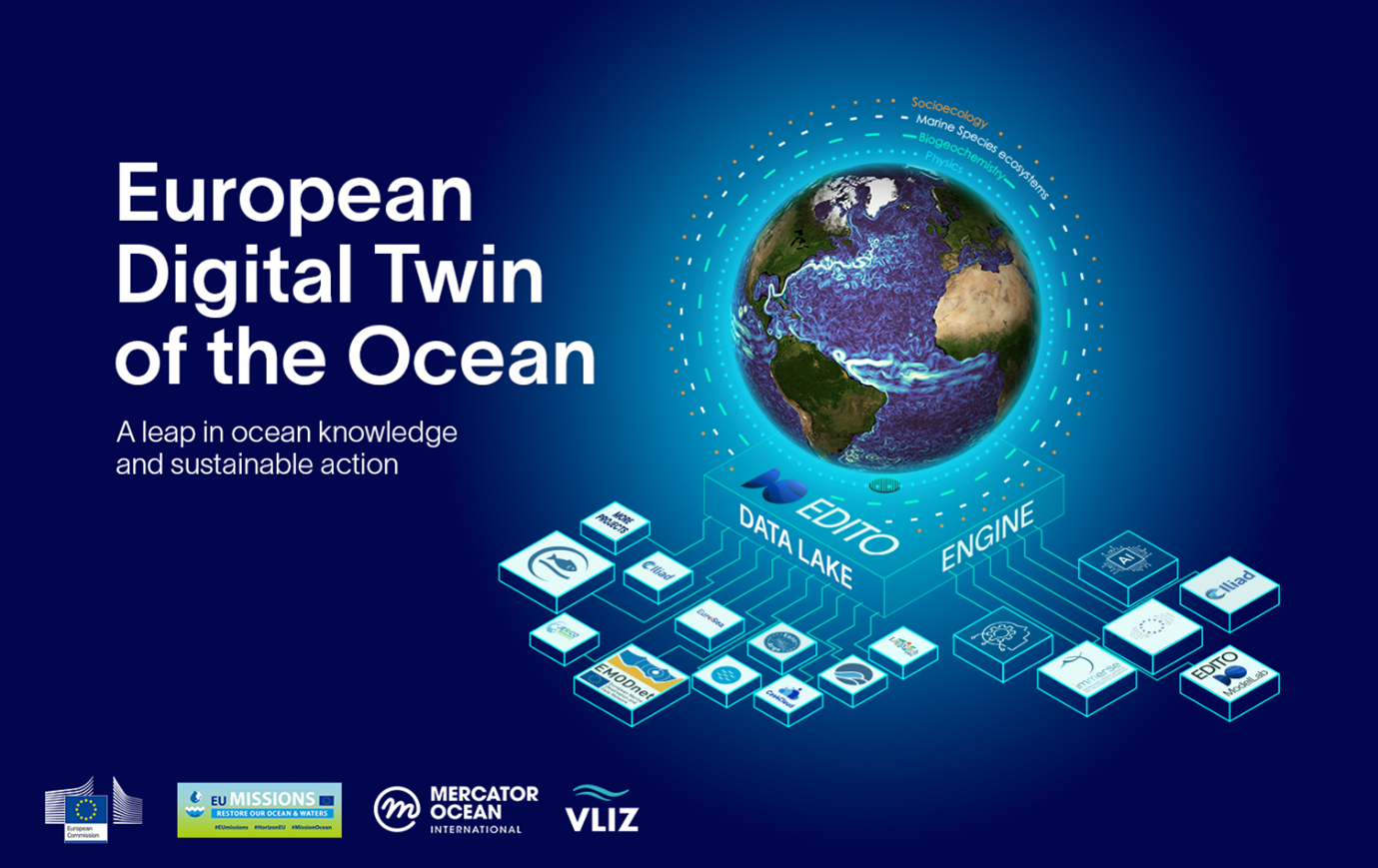
This evolution is particularly evident in the work being conducted on the Digital Twin of the Ocean developed by Mercator Ocean International. This digital twin of the ocean combines observations, modeling, and artificial intelligence to represent the functioning of the ocean system. Its goal is not only to describe the ocean’s current state (“What now?”) or to predict its short-term evolution (“What next?”), but also to explore possible futures through a third question: “What if?” What would happen if plastic waste emissions were reduced? How would a coastline change if certain ecosystems were restored? The tools developed by Mercator Ocean make it possible to explore precisely these scenarios. The challenge is no longer to produce a single prediction, but to virtually test different options before implementing them. The same logic guides the Reference Warming Trajectory for Adaptation (TRACC), formalized in France in 2026, which assumes a warming of +2.7°C by 2050—not to predict the future, but to plan as if it were to occur.
The model then ceases to be an oracle and becomes a testing ground. It no longer answers “What will happen?” but rather “What do we want to happen, and at what cost?” The “What if?” is not just another forecast: it is a governance tool.
This shift marks a major turning point in a world where the past offers us less and less guidance. The value of a model lies in its ability to reveal the possible consequences of our choices before they become irreversible.
As models become more sophisticated, there is a strong temptation to delay action while waiting for more accurate data, a more robust scenario, or a more reliable forecast. The need for knowledge can then become an excuse for inaction.
However, as highlighted intheUnited Nations Environment Program’s 2024Adaptation Gap Report, the main barriers to adaptation are not scientific but financial. We are more than capable of documenting climate risks; the challenge lies instead in funding and political decisions.
The focus on knowledge has now given way to a focus on action. But taking action requires securing funding, balancing competing priorities, and sometimes challenging established interests. Faced with often complicated trade-offs, the search for new data can become a way to delay decision-making.
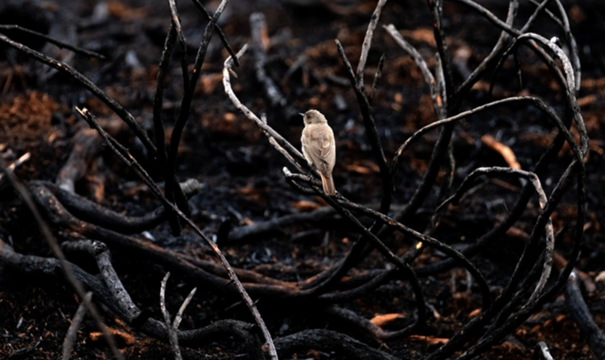
This difficulty often manifests as a form of institutional inertia in a system that is unable to organize its own transformation. Post-disaster reconstruction is a striking example of this. Indeed, after a flood, storm, or fire, the most common response is still to restore buildings to their previous condition. However, there is no general principle in French law that requires reconstruction to be identical to the original. Rather, this practice stems from a set of administrative, insurance, and financial mechanisms that lead to a preference for returning to the previous situation. Following the fires in Gironde and Landes in the summer of 2026 (more than 42,000 hectares burned), the debate over replanting a maritime pine forest—a near-monoculture singled out for its flammability—immediately clashed with the temptation to restore the landscape exactly as it was. Thus, we are recreating vulnerability rather than reducing it, thereby setting the stage for the next disaster. It is not enough to have excellent models; we must take the time and find the means to avoid replicating the same vulnerabilities.
Who could have predicted the climate crisis? No one, in the strict sense of the word: prediction was never the issue. Climate change could have been foreseen—and it was—and it needed to be anticipated. For a long time, we viewed anticipation as a way to reduce uncertainty to the point of making the future predictable. Yet it will never be entirely predictable—and even less so in a world that no longer resembles its past.
The strength of a society, a company, or an institution therefore lies not only in its ability to anticipate, but also in its ability to learn, adapt, and reinvent itself in the face of the unexpected. This requires a shift from an approach focused on optimization—inherited from a relatively stable world—to one focused on resilience, designed for a changing world.
This shift also applies to money. Today, the financial sector is betting on the future: it assesses risk, prices it, and pulls out when it becomes too high—just like California insurers. In the future, it will have to help shape that future by financing prevention, adaptation, and restoration—measures that make a region livable—rather than simply accepting its decline. Every euro invested in prevention can save several euros in claims: this isn’t a gamble—it’s a choice.
The challenge, then, is not to predict the future, but to preserve our freedom to shape it. To govern is to plan; to govern is to anticipate; to govern, from now on, is also to decide what kind of future we want to make possible.